 Robert Ambrogi Blog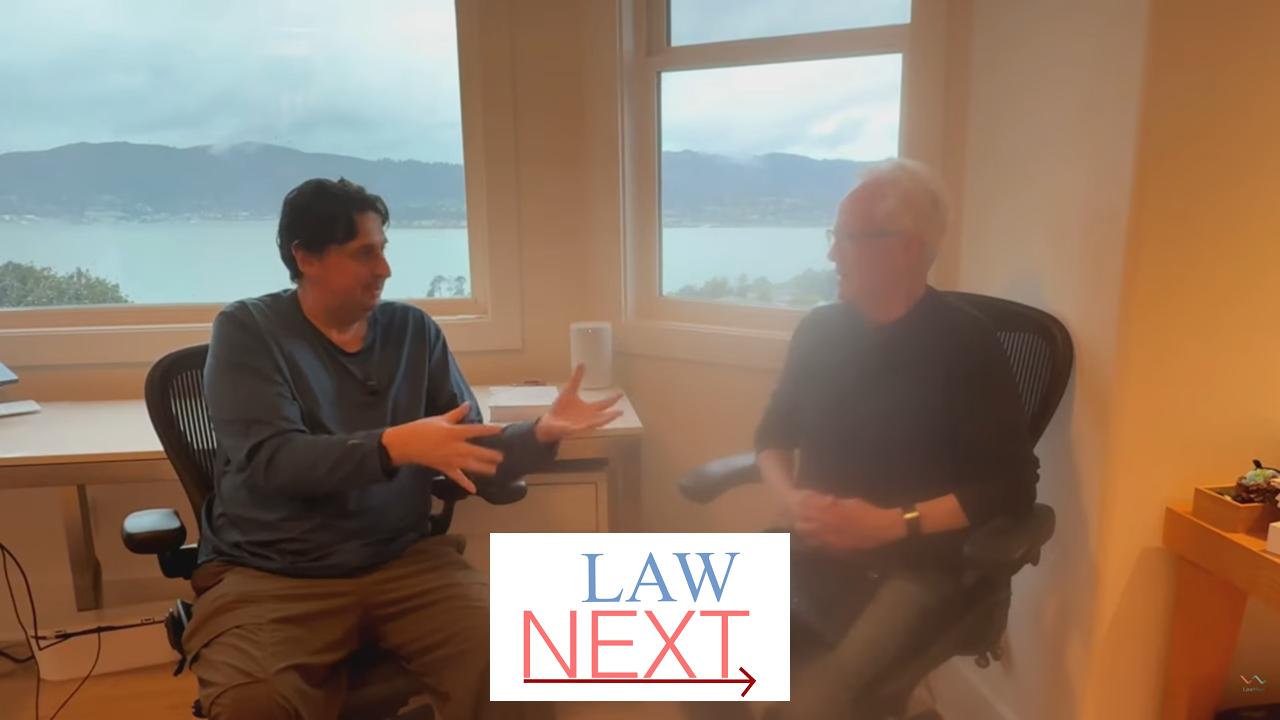


As I continue my LawNext on Location series – all recorded live in the San Francisco area at locations of each guest’s choosing – he sits down with Pablo Arredondo at his home in Tiburon, a quaint Marin County town with a history stretching from Mexican land grants to naval outposts to a southern railway terminus. From Pablo’s home office, the view looks out over Richardson Bay towards Sausalito and, if you look carefully, the Golden Gate Bridge can be seen in the distance. It is a setting that is entirely fitting for a conversation with someone who helped shape one of the more remarkable journeys in the annals of legal technology.
(My apologies for the video quality. A videographer, I’m not.)
Pablo was cofounder of Casetext, the once-scrappy startup that spent a decade iterating, pivoting and persisting before striking gold with CoCounsel, the first GPT-4-powered AI legal assistant, unveiled on the nationally televised Morning Joe show on March 1, 2023. Just four months later, Thomson Reuters acquired Casetext for $650 million in cash. Now, 2.5 years later, Pablo recently left TR, where he is, as he puts it, building a Lego Death Star with his daughter and finally paying attention to his well-being after 16 years of nonstop pursuit.
In this wide-ranging conversation, Pablo reflects on the long road to CoCounsel – from a failed crowdsourcing experiment to CARA’s brief analysis tool to the pivotal moment when Casetext signed a $20,000 innovation license with OpenAI and got early access to GPT-4, 10 weeks before ChatGPT’s public launch. He describes the surreal experience of those first 48 hours after CoCounsel’s debut, when he and cofounder Jake Heller identified 74 distinct legal use cases the tool could handle – any one of which, he says, “would have been a company in the old world.”
Pablo and I also dig into the bigger questions surrounding legal AI, including whether the field is advancing as fast as he expected; what the foundation models from Anthropic, OpenAI and Google mean for legal-specific AI companies such as Harvey; and why he believes reasoning models and agentic AI represent the next genuinely profound leap beyond GPT-4. Pablo also candidly reflects on the TR acquisition and his work while at TR, and he offers hints on what may lie ahead for him – at least once that Death Star model is done.
It is a conversation that is part memoir, part technology seminar and part meditation on what it means to have built something that changed a profession – and his life – all recorded with a sweeping, albeit cloudy, view of the majesty of San Francisco Bay.
Listen here: