 Robert Ambrogi Blog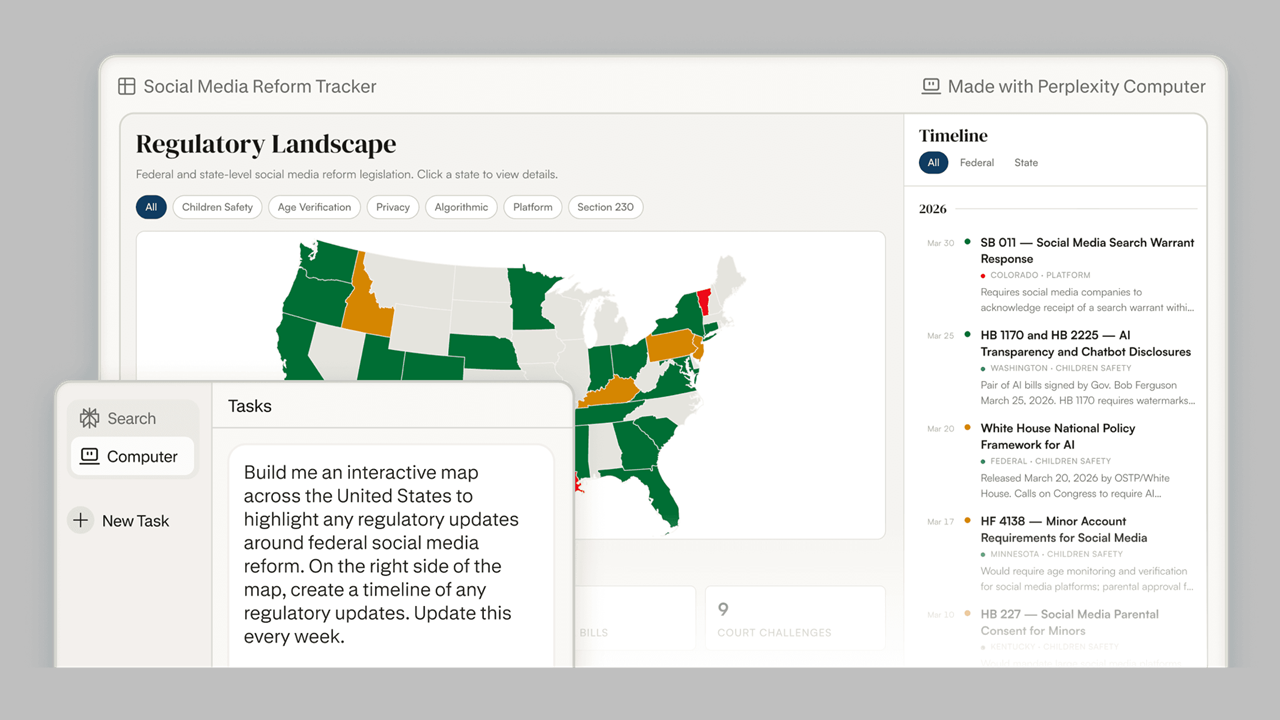


Perplexity, the AI search engine known for delivering sourced answers to user queries, is making an explicit move into the legal market, rolling out legal-specific features within its agentic platform, Perplexity Computer, and positioning the product as what it calls “Computer for Counsel.”
The company highlighted the legal push yesterday at an invitation-only event in New York aimed at in-house counsel, lawyers at small and midsized firms, and legal tech founders. The event marked Perplexity’s most conspicuous effort yet to target legal as a specific vertical for product development, partnerships and go-to-market strategy.
Notably, Perplexity is expressly not attempting to build a full-fledged legal research database in the mold of Westlaw, LexisNexis or Bloomberg Law. Rather, it describes its platform as a research, drafting and workflow layer that can sit on top of the web, connected enterprise systems and specialized legal data sources, giving lawyers cited answers they can verify and use as the basis for further work.
“Connect research databases, document repositories, contract tools, and matter-management systems lawyers use every day so the admin work gets handled,” the website says.
A key part of that strategy is a new integration with Midpage, the legal research startup that has been building connectors to bring U.S. case law, statutes and regulations into general-purpose AI tools. (For an example of one, see this 15-minute demo I recorded with Midpage founder Otto Zastrow of its ChatGPT plugin.)
Through the Midpage connector in Perplexity, users can access authoritative legal research sources from within Midpage and Perplexity can then assemble them into a brief or memo.
What Perplexity Is Launching
I was not at yesterday’s event, but Perplexity’s website describes the overall offering as Perplexity for Legal, and within that, Computer for Counsel. The company says the product is designed to connect research databases, document repositories, contract tools and matter-management systems so that agents can perform research and administrative tasks in the background.
Perplexity outlined several scenarios as examples of how legal professionals could use the product. Among them:
- Cross‑jurisdictional legal and regulatory research, with agents monitoring developments and surfacing rulings and judicial opinions organized by jurisdiction, date, and relevance.
- Prospect and client research, where the system builds briefings from public filings, news, leadership profiles, and litigation history in a client‑ready format.
- Regulatory and legislative tracking, including regulatory filing monitoring, with daily or periodic digests summarizing new rules, proposed regulations, and guidance.
- Contract analysis and document review, including uploading a contract set and extracting specific clause types into comparison tables for due diligence or negotiations.
- Business development support, where agents generate tailored pitch materials and RFP responses by pulling firm experience, case studies, and attorney profiles from internal knowledge bases.
- Patent workflows, via a “Patent prior art search” scenario that uses patent databases and non‑patent literature to organize prior art by filing date, assignee, and relevance.
The Perplexity web page says that every answer includes inline citations linked to an underlying ruling, regulation, filing or client document, enabling attorneys to validate sources before incorporating the work into a memo, briefing, client communication or other deliverable.
On the integration side, Perplexity lists connectors to tools including Google Drive, OneDrive, DocuSign, Drata, PandaDoc, Box, Carta, DeepJudge and NetDocuments. It also says Computer can reason over the open web and premium sources for legal, naming, in addition to Midpage, LegalZoom and Deel among them.
At its website, Midpage says its Perplexity connector allows users to conduct legal research and drafting inside Perplexity using its coverage of U.S. case law, statutes and regulations. The connector is available to Perplexity users free of charge, subject to caps based on their Perplexity plan.
Users can activate it either by typing “@midpage” before a prompt or by selecting Midpage from Perplexity’s connectors.
Gunderson As Early Proof Point
Perplexity is highlighting a partnership with law firm Gunderson Dettmer as evidence that its enterprise product can gain traction in law firms.
According to a Perplexity customer story, Gunderson rolled out Perplexity Enterprise firmwide and now has 80% of its lawyers, including 80% of its partners, actively using the platform. Perplexity says the firm generates more than 35,000 queries a month through the product.
Gunderson Chief Innovation Officer Joe Green described the tool in Perplexity’s materials as providing “rapid, cited context” that lawyers can validate quickly, and said it amplifies rather than replaces attorney expertise.
AI Companies Target Legal
Perplexity’s move comes at a time when general-purpose AI companies are increasingly targeting the legal sector with domain-specific workflows, connectors and partnerships.
OpenAI, Anthropic, Microsoft and Palantir have all made moves that bring them closer to legal work, whether through legal-specific tools, enterprise AI deployments, connectors to legal data, or partnerships with law firms and legal technology companies. Perplexity now joins that group with a more explicit legal strategy of its own.
For incumbent legal research and legal technology providers, the competitive implications are complicated. Perplexity is not trying to out-Westlaw Westlaw. It is not, at least for now, positioning itself as the system lawyers should use to Shepardize or KeyCite a case, build a litigation analytics strategy, or conduct exhaustive research.
Instead, it is going after a broad category of work that happens before, around and after traditional legal research. No doubt, that is a significant slice of legal work, particularly for in-house teams and smaller firms that may not have the staffing or budgets of large law firms.
It is also an area where lawyers are already experimenting with general-purpose AI tools, often without the guardrails, connectors or enterprise controls that legal organizations would prefer.
The Bottom Line
Perplexity’s legal launch is another sign that the boundary between legal tech and general-purpose AI is continuing to blur.
For years, legal tech has been defined by specialized vendors building specialized tools for specialized tasks.
Those tools are not going away anytime in the near future. But it seems that Perplexity is betting that many lawyers will also want a single AI interface that can traverse the open web, internal documents and specialized data sources.
For in-house teams and smaller firms in particular, that could be an appealing proposition.