 Robert Ambrogi Blog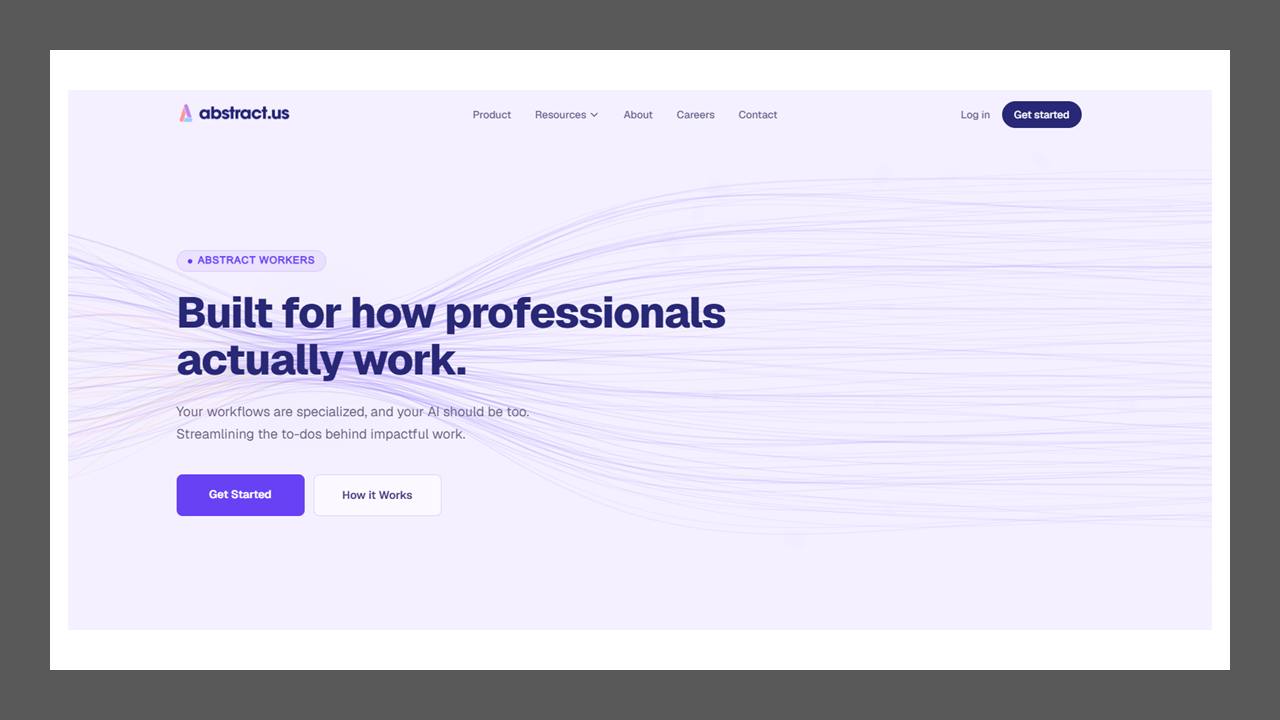


When I wrote about Abstract in April, I reported on how the New York-based startup was making a push into the market for legislative and regulatory monitoring, alerting law firms and corporate legal teams to the bills and rules that matter to a client, even when they never mention that client’s industry by name. Now the company is employing AI agents to expand into the next step of that work — the follow-up that an alert can trigger.
Today, Abstract announced Abstract Workers, a service that builds AI agents to take over the repetitive tasks that follow a regulatory or legislative alert — reading and prioritizing, updating trackers, drafting emails and newsletters, preparing reports, and coordinating follow-up. Rather than hand customers another dashboard, Abstract says, the service hands back finished work inside the tools they already use.
“Abstract started by helping professionals find the information that matters and now we are helping them act on that information,” said Pat Utz, CEO and cofounder, in the announcement. Utz said the company heard from customers that their real burden was not simply understanding a new law or regulation, but everything that had to happen afterward.
From Insight to Output
With Abstract Workers, the company, not the customer, does the work. In consultation with its customers, it handles the setup, testing, deployment and optimization of each “Worker,” including cost analysis. That saves the customer from having to learn new software, wire up automations, or figure out how to build an agent.
Abstract describes the agents as “reliable” and “deterministic.” They are able to connect to the software where legal, compliance and government affairs professionals already do their work, including email, Google Workspace, Microsoft 365, SharePoint, Slack and Adobe.
Examples of what these Abstract Workers can do, already in production, include:
- Scanning legislation across all 50 states, drafting briefings, and logging each item to a tracker built in Gmail and Google Sheets.
- Drafting branded email newsletters using Abstract’s own legislative, regulatory and industry data.
- Producing daily PDF monitoring reports covering grants, hearings, agency actions and executive orders.
- Sending email and Slack alerts that flag trending social media posts based on a client’s priorities.
- Pulling matter, billing and trust-account data and auto-filing client emails into the correct case in Clio.
- Monitoring accounts receivable in QuickBooks, sending timed reminders on overdue invoices, and escalating non-payment.
- Detecting executed documents and filing them by naming convention across Outlook, DocuSign and OneDrive.
- Redlining documents against a custom ruleset in OneDrive, SharePoint or Google Drive.
I have not yet seen a demo of these new Abstract Workers, but what strikes me about this list is that several of the examples go beyond extensions of the legislative and regulatory work I’d previously seen demonstrated.
Functions such as Clio matter management, QuickBooks collections, document filing and redlining appear to move the product beyond policy intelligence into the broader area of legal and back-office workflow automation.
Abstract’s Background
Founded in 2020, Abstract began as a research project at Loyola Marymount University with a mission of making government information more accessible. It has since become a venture-backed company with teams in New York and Los Angeles, and in January 2025 it closed a $5 million seed round to fund its current product. It says its customers include Fortune 500 companies, Am Law 200 firms and public policy organizations.
Compared against legacy bill-tracking platforms, Abstract differentiates itself on its proprietary regulatory and legislative data infrastructure. That data layer, the company says, lets its agents operate with deeper context and tailor their output to the needs of legal, compliance and government affairs teams.
It also says it is launching with a library of workflows designed by experts across government affairs, legal, compliance, lobbying, accounting and finance.
Pricing of Abstract Workers is available for both individuals and enterprise teams and is based on complexity, needs and usage, Abstract says.