 Robert Ambrogi Blog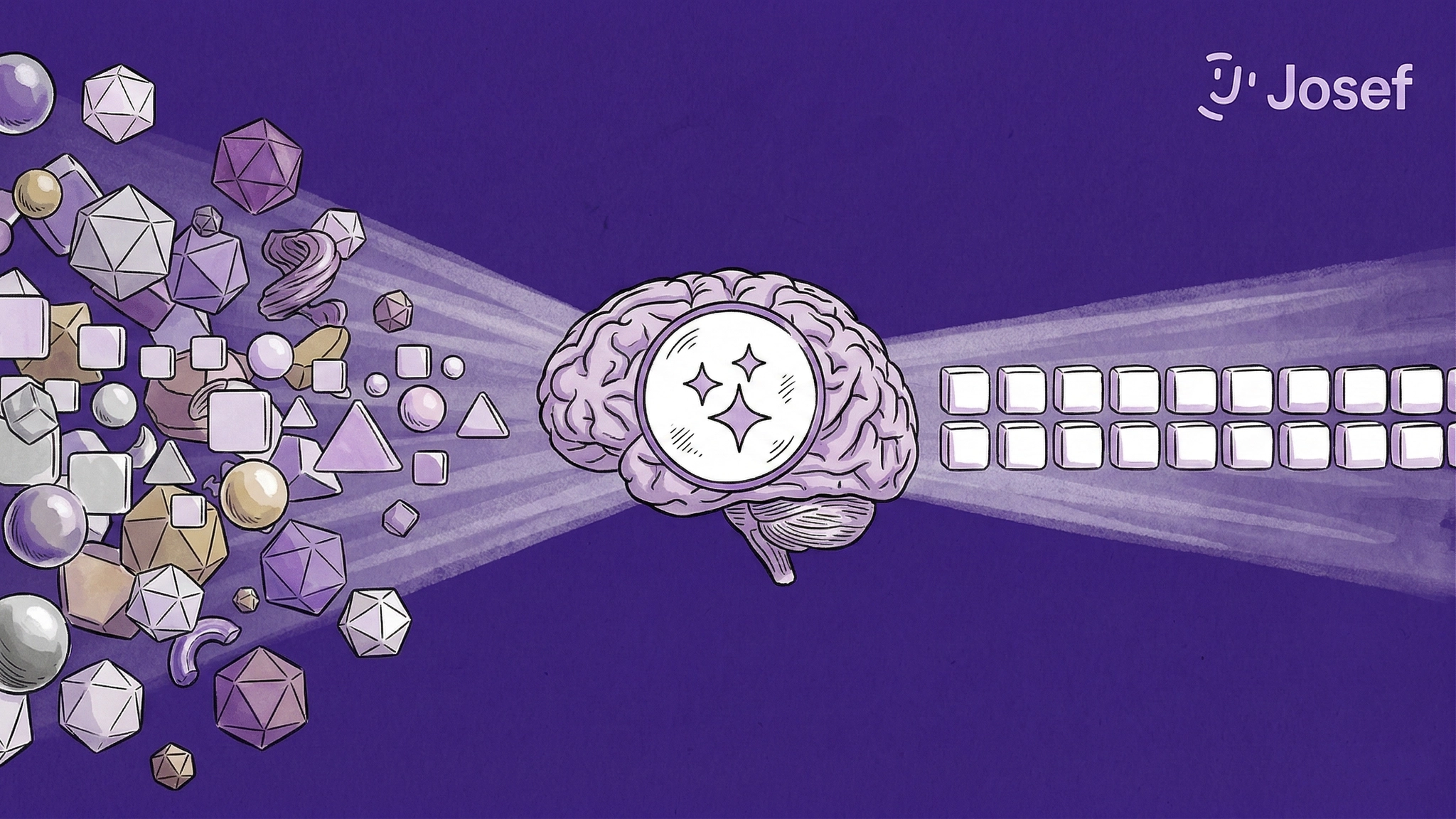


Legal AI has made lawyers faster. Faster contract review. Smarter redlines. Drafting assistance that saves real time.
For the most part, legal AI products have been built around lawyers: how they work and how to make that work better. This isn’t surprising when you consider whose budget pays for legal AI.
But the first friction that clients and business users feel sits much earlier in the legal workflow. It’s when the commercials have been agreed, a decision has been made, a commitment has landed somewhere in an email thread, and someone now has to translate all of that into something Legal can act on.
In most organisations, that translation still means a long intake form, a manual extraction job, or a lawyer hunting through a document chain to piece together the terms.
The bottleneck in most legal workflows is not generating a document. Legal teams solved that years ago with carefully constructed templates. The bottleneck is everything that happens before the template runs.
The form was always the wrong front door
Legal operates downstream of commercial activity. Sales agrees pricing in emails. Procurement captures vendor terms in a summary document. Marketing locks down partnership deliverables in a meeting note.
None of these artefacts are designed for structured legal workflows, for consistency or for legal correctness. They are designed for speed.
Eventually, these artefacts need to become agreements, and that transition has always created friction. A lawyer reads the email chain, extracts the commercial terms, and manually enters them into a template. Or the business user is handed a long intake form and asked to do the same thing themselves. Even with sophisticated automation on the back end, the front end still feels like 2010.
For so long, this made sense. If the only way to create structured outputs was to feed in structured inputs, then a form is a good choice. But in the age of AI, that constraint no longer applies and legal workflow automation needs to catch up.
AI belongs at the intake layer
There is an enormous amount of excitement for AI that drafts contracts, letters and other legal documents from scratch. Some of that is genuinely useful. But freeform AI drafting is not what high-volume internal workflows need.
Templates exist because they encode institutional knowledge. They capture carefully calibrated risk positions. Introducing variability at the output stage introduces risk, especially when business users are being encouraged to self-serve.
The right job for AI is not drafting the template. It is reading the mess that arrives before the template runs.
Upload the email thread. Upload the term sheet. Upload the meeting notes.
AI can read the document, identify the commercial data points the workflow requires, and map them into the structured fields the template expects. If something is missing, it can flag the gap before proceeding. The user reviews the populated fields and confirms. The agreement is generated from the approved template.
AI captures and restructures the inputs. Deterministic systems control what leaves the workflow.
What this looks like in practice
Take a marketing team that has negotiated a sponsorship arrangement. Pricing, branding rights and deliverables were agreed over email. Under the traditional model, that thread gets forwarded to Legal and sits in a queue. Or the marketing lead fills out a 40-field intake form pulling information directly from the thread they just sent.
In a well-designed workflow, the marketing lead uploads the email thread. The system extracts the commercial terms, maps them into the structured fields for the sponsorship agreement, and flags any gaps before proceeding. The user reviews and confirms. The agreement is generated instantly from Legal’s approved template.
Legal does not manually transpose data. Marketing does not wait in a queue. Contract standards remain intact.
The better question
The legal tech market has spent years asking: how can we use AI?
The more useful question is: where is the friction?
In most legal-to-business workflows, the friction is not in document generation. It is in the translation layer between messy commercial reality and structured legal inputs. Solve that translation problem and you remove a major bottleneck without compromising the control that Legal teams need.
The form was the best solution we had when there was no reliable way to interpret unstructured inputs at scale.
That constraint has now been removed. The template was always the product. AI just got good enough to make it accessible.
 Tom Dreyfus is cofounder and CEO of Josef and leads the company strategy and global relationships with customers and technology partners. He brings a global perspective on the legal industry, with experience working in law firms, universities, in-house teams and the court system both in Australia and the United States.