 Robert Ambrogi Blog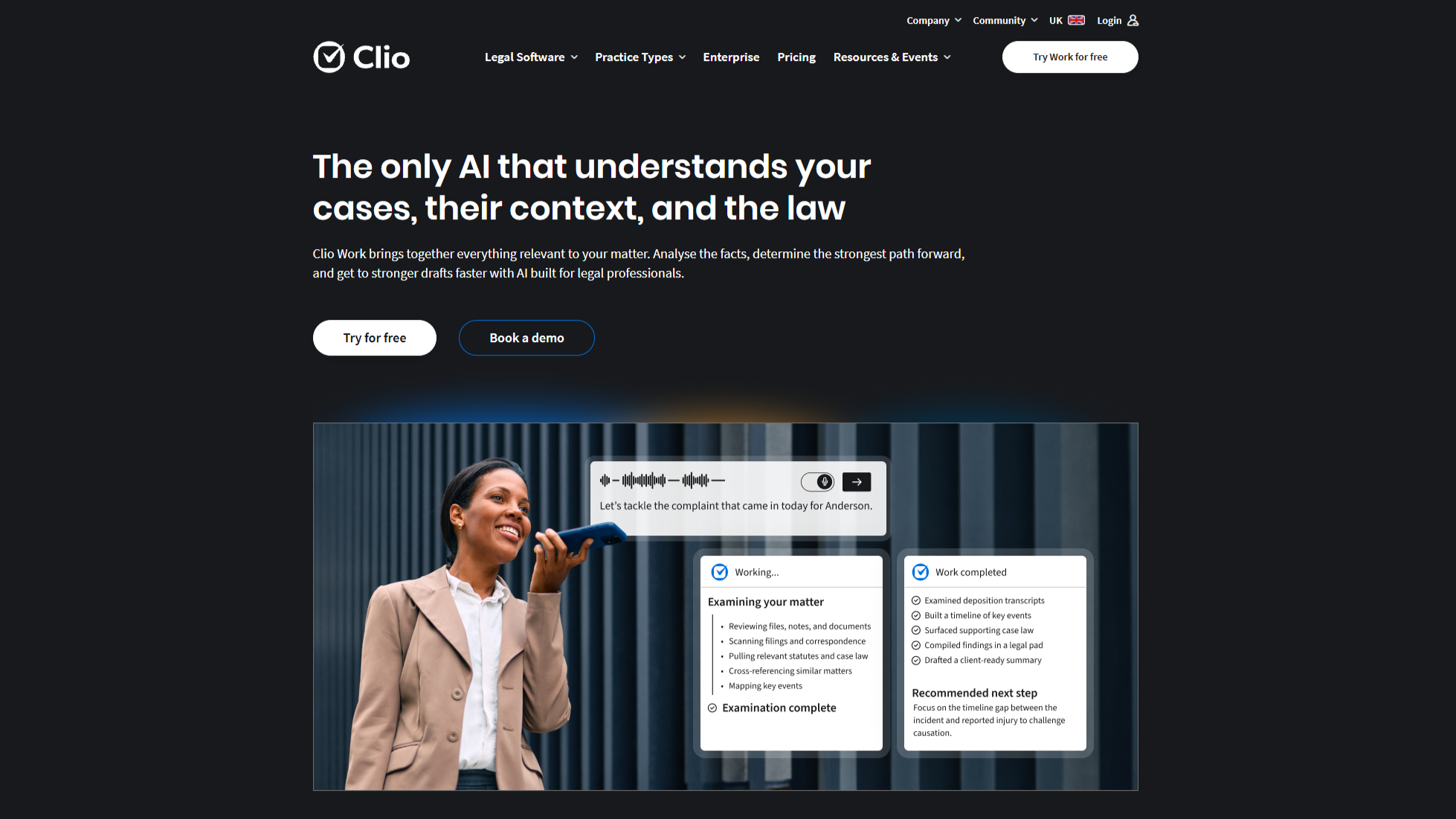


When Clio acquired vLex in 2025, a key asset it gained was Docket Alarm, one of the world’s largest litigation databases containing more than 1 billion filings from federal and state courts. At the ClioCon user conference last year, Clio relaunched it as Clio Docket.
Now, Clio is making Clio Docket available from within Clio Work, its AI-driven legal work environment, enabling users to connect public court dockets to the corresponding client matters, monitor those dockets for new activity, retrieve relevant filings, and immediately begin any substantive legal work that follows.
The addition brings three capabilities to Clio Work: monitoring of public dockets, search across federal and state court filings, and retrieval of the underlying documents. Lawyers can search by party, case number, keyword or court to retrieve documents from their own cases or to find relevant motions, briefs, pleadings and orders from other proceedings.
Once a lawyer connects a case docket to the corresponding client matter, Clio Docket watches that docket and alerts the lawyer to new filings, orders and scheduling changes.
Using Clio Work, the lawyer can then research the issues raised by a new development; compare similar motions, briefs, pleadings and orders from other proceedings; and begin drafting a response.
As I reported in April, solo, small and mid-sized law firms can now purchase Clio Work as a standalone product. But Clio says it is better together with Clio Manage, its flagship practice management platform.
“Clio Work and Clio Manage work in tandem to give legal professionals one complete picture of the matter,” the company said in a press release. “As substantive legal work is completed in Clio Work, it carries into the matter in Clio Manage, alongside the deadlines, tasks, communications, time, billing, and other activity tied to that client and matter.”
Clio Docket can also help lawyers save money on docket downloads by providing access to a shared document collection. Once any Clio Work customer purchases or adds a document via Clio Docket, the document is available to anyone within the firm at no extra charge.
That avoids the need to pay a source such as PACER to download a document someone else has already purchased.
(Note that some other products have a similar feature, including CourtListener and PacerPro.)
From Docket Alarm to Clio, via vLex
Clio Docket is the evolution of Docket Alarm, the litigation analytics and docket-research platform founded by Michael Sander.
In 2018, Docket Alarm was acquired by Fastcase, the U.S. legal research company. In 2023, vLex merged with Fastcase, bringing Docket Alarm’s court-data collection into the vLex fold alongside its Vincent AI research technology.
Then, in June 2025, Clio acquired vLex for $1 billion, folding all of that legal research and docket data into Clio’s practice management platform.
Clio introduced Clio Docket at ClioCon 2025 as Docket Alarm’s next chapter, and today’s release delivers on that by bringing court search, document retrieval, and docket monitoring directly into Clio Work’s AI suite.