 Robert Ambrogi Blog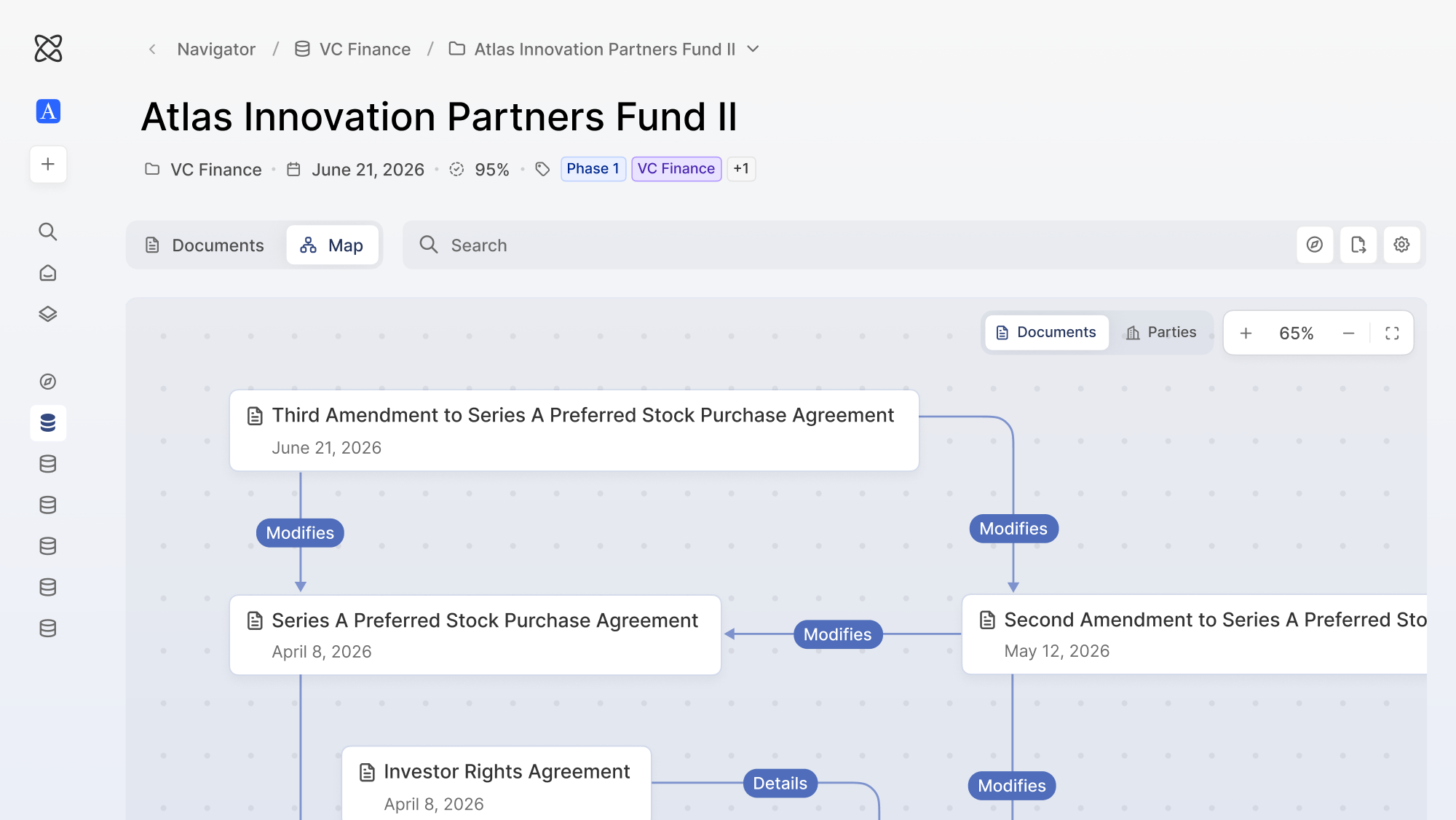


Centari, an AI platform for managing complex transactions, today launched two capabilities, Amendment Awareness and Deal Maps, that help attorneys understand how transactions change over time and how documents relate to one another.
Both features further extend Centari’s platform beyond single-document review to reasoning across the multiple agreements, amendments, and ancillaries that make up a complex transaction.
The features are available immediately to Centari customers.
The features are designed to answer a problem most legal AI tools have not solved, the company says. Large language models read documents as text at a fixed point in time, while transactional attorneys read a deal as a system — following defined terms, chasing cross-references, and tracking how one agreement modifies, satisfies, or supersedes another.
Centari says its patent-pending platform, which it calls the Deal Reasoning Engine, was built to work the second way, and that the two new capabilities extend that engine across amendments and across whole closing sets.
“Transactional attorneys don’t work document by document,” said Kevin Walker, founder and CEO of Centari and a former Paul Hastings M&A attorney. “They work deal by deal. Understanding a transaction means understanding how agreements, amendments, schedules, and related documents fit together.”
Amendment Awareness
Amendment Awareness is designed to keep a deal’s underlying data current as a transaction changes. When an amendment is uploaded to an existing matter, the system identifies what changed and updates the deal’s data points to reflect the operative terms, rather than leaving a record that reflects the agreement as originally signed.
In an interview yesterday, Walker drew a distinction between this and redlining. The capability is not tracking textual changes, but reading how an amendment alters the meaning of a deal over time.
“It’s a conceptual understanding of how a document is evolving over time,” Walker said. “It’s not just looking at how this text has changed, it’s understanding how it’s changed the meaning of the whole deal over time as new documents are signed.”
As examples of the kinds of documents the feature is built to handle, he pointed to amended and restated limited partnership agreements and amended purchase agreements, where rights can shift substantially between the first version and a later one.
Centari says this capability can be of greatest use to credit facilities, portfolio company governance documents, fund structures, and other matters that evolve across multiple amendments.
Deal Maps
The new Deal Maps feature (pictured in the image at the top of this article) generates a visual graph of how the documents in a transaction relate to one another, showing where one agreement incorporates, modifies, satisfies, replaces or supersedes another.
The map is generated automatically, without manual classification or chart-building.
Walker described the feature as a new way to visualize relationships that lawyers have historically had to reconstruct by hand.
“Attorneys spend significant time reconstructing document relationships that already exist within a transaction,” he said. “Deal Maps makes those relationships visible immediately.”
He compared the concept to the structure charts and fund-flow diagrams lawyers already build, but applied to the documents themselves. In the past, he said, that information lived in a closing checklist or had to be pieced together from circulating drafts.
In a demonstration, Walker showed an M&A closing set of six agreements in which the map depicted an amended and restated purchase agreement superseding the original, with an equity commitment letter, a reps and warranties insurance policy, and an escrow agreement shown as satisfying or adding detail to it.
Positioning at the Data Layer
Walker told me that the focus of Centari’s development is not on the application layer alongside tools such as Harvey and Legora, but rather on helping firms create high-quality, structured data assets from their own deal documents — data the firm can then use in whatever AI system it prefers.
“We want to help them create data that they can trust when it matters to clients,” Walker said.
Walker said Centari is working toward a definitive ontology of a firm’s knowledge and deal history, running from the practice group down to the individual deal, clause and data point.
He added that the company has expanded its team since late 2025, hiring attorneys from large firms and investing in applied legal research, and said the two new capabilities grew out of the founders’ experience as practicing attorneys.
Centari’s customers include Ropes & Gray, Willkie, Fried Frank, and Wilson Sonsini.