 Robert Ambrogi Blog
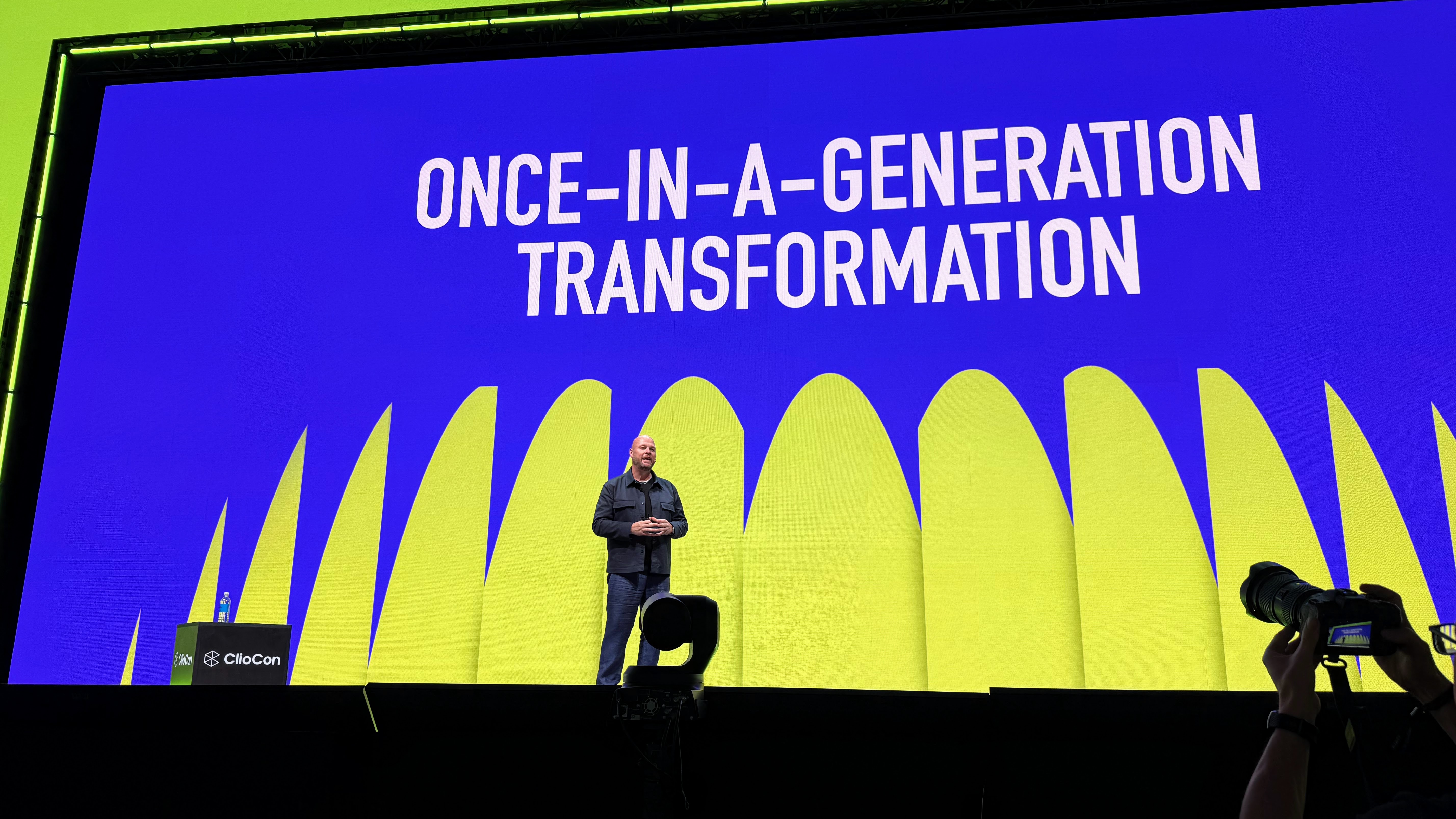


Within the span of 48 hours this week, I was an in-person witness to the legal profession’s divide on AI. Through a bit of karmic coincidence, I was in a room one day dominated by people who fear it as a threat, and then two days later with those who embrace it as an opportunity. I went from those who push against its arrival to those who understand it is already here. I saw those who fear losing control of their profession and then those eager to seize control of their AI-enabled futures.
It started in New Haven, where I was at Yale Law School to speak on a panel debating the extent to which law school clinical programs should incorporate AI. To my surprise, of the 40 or so educators sitting in that Yale classroom, drawn from law schools all over the United States, they overwhelmingly expressed a strong sense of caution, reserve and, yes, even fear, about teaching AI in the clinical setting.
I understand their concern. If law students rely too heavily on AI, goes their argument, how will they learn the fundamental skills of critical thinking and effective writing that are essential to practicing law. It is the same argument that led UC Berkeley School of Law earlier this year to adopt one of the most restrictive student AI policies of any U.S. law school.
“Thinking remains the sine qua non of good lawyering (and of a quality legal education),” the policy said. “This policy seeks to ensure that our courses focus on requisite cognitive skills by default.”
But the fact is, of course, that the ability to use AI knowledgeably and responsibly is now also a core skill. If it is not taught in law school, then where will it be taught? Is it not better to teach it in a supervised setting than to have newly minted lawyers learning it in the context of representing their own clients?
Driving this attitude is the notion that AI is something that is coming to the legal profession, and that we will deal with it when it gets here. They acknowledge that it will someday change the practice of law, but they fail to see that it already has.
Representative of these academics’ reservations, one audience member insisted that AI will have no place in the clinical programs he oversees. Yet even as he did, he conceded that he may need to incorporate it at some point in the future, at some point when AI is pervasive in legal practice and can no longer be ignored.
My answer to that audience member’s comment was to recite the famous William Gibson quote, “The future is already here – it’s just not evenly distributed.”
Fast Forward to the Future
Forty-seven hours later and 140 miles away, it was my turn to be in the audience, as Clio founder and CEO Jack Newton opened the 14th annual ClioCon with his signature keynote laying out all of the company’s latest developments. This time, there could be no avoiding the fact that legal’s AI future is already here. This time, the audience was in full embrace of that future.
Before an audience of some 3,000 in-person attendees and 8,500 virtual attendees, over a span of some 95 minutes, Newton described the most ambitious and significant roll-out of new products and capabilities in the company’s 18-year history. That is notable, given that his keynote last year, in which he laid out Clio’s vision for using generative AI to dissolve the line between software for the business of law and software for the practice of law, left last year’s audience of 2,700 feeling emotions ranging from thrilled to shell-shocked.
Last year, major parts of that vision were still off in the future. Although Clio had already announced its acquisition of vLex, it had not yet closed the deal as it awaited regulatory approval. While it had been able to begin planning for that combined future, it was limited in how much it could actually begin to develop, let alone implement.
Now, those companies are one, and in this year’s keynote, Newton described the coming together of those companies – with Clio’s roots in practice management and vLex’s roots in legal data and AI – as a “refounding” of Clio.
“We made a billion-dollar bet on that vision with our acquisition of vLex,” he said. “With vLex, we brought world-class legal AI and one of the world’s most comprehensive global legal databases together with Clio’s understanding of how your practices run. That was the most transformative move we’ve ever made as a company.”
It is not an exaggeration to say that Clio’s acquisition of vLex was transformative for the company. But the more important point may be that it was transformative for the industry. Thanks to AI, we are at a moment in which not only is content king, but maybe even more so, context. And the union of Clio and vLex gave it both and positioned it as one of the legal industry’s major forces of innovation and, yes, transformation.

Clio’s new logo features a square ‘single pane of glass’ surrounded by the context of a firm’s matters.
The center is a clear square that, Newton said, represents a single pane of glass, one view into a firm’s matters, clients, documents, operations and knowledge. The form surrounding it represents the context flowing through the firm.
“We wanted an identity that reflected everything Clio has become over the last 18 years,” Newton said. “But we also wanted an identity that was timeless, so it could grow with us over the next two decades and beyond.”
The Future Is Already Here
In a post yesterday, I wrapped up the many announcements Newton discussed during his keynote. They included a redesigned platform that creates a unified experience across its core products Clio Manage, Clio Grow and Clio Work; an AI assistant available from anywhere within the platform that can answer questions across clients and matters; new agentic workflows; Clio Phones, a new business phone system; a new document management system; new automated timekeeping; a new AI intake assistant in Clio Grow; hybrid billing to send invoices covering both hourly and fixed fee billing; and more.
Perhaps the best way to understand how this all comes together for a law firm is to imagine a hypothetical real-world scenario – and that is exactly what Newton did during his keynote, walking the audience through the steps of a legal matter and the tools that smooth the path along the way:
- It is 9:40 p.m. on a Tuesday when Beth Marchetti calls the law firm about her legal problem. The firm is closed but Grow AI answers. Beth’s father Sal has run a millwork shop his whole life, but now, in his 80s, his memory is slipping and he signed a costly contract for machinery the shop does not need and cannot afford. Beth’s brother Nick, from whom she is estranged, holds a power of attorney that takes effect only if Sal cannot manage his affairs. Although Beth is concerned, she says Nick cannot bring himself to admit what’s happening to his father.
- In addition to capturing Beth’s message, Grow AI asks the firm’s qualification questions, screens the matter against the firm’s criteria, runs a conflict check, and schedules a video consultation. The next morning, the partner opens Clio and finds Beth’s story in her own words.
- They meet Thursday and the firm takes the matter. They agree on a fixed fee for the filing portion of the petition, with hourly billing if the filing becomes contested.
- That afternoon, Beth calls again. Before the partner answers, Clio Phones identifies who is calling and which matter it concerns. Beth wants the lawyer to understand that protecting her father’s business is her primary concern. With her consent, the call is recorded, transcribed and summarized into the matter.
- Beth texts a photo of the equipment contract her father signed. It’s filed into the matter’s context automatically.
- The partner drives out to meet Beth and Sal at the shop. With their permission, Clio’s mobile app records, transcribes and summarizes the conversation.
- Some 412 pages of medical records arrive from three providers and are automatically filed and organized, with access to sensitive records restricted to those who need it.
- On Friday, an associate new to the case opens the matter and, using AI chat, asks Clio what has happened so far. The calls, the contract, the visit and the records come back as a single narrative, each cited to its source.
- In Clio Work, the associate asks for a timeline of events. It shows that five weeks before Sal signed the contract, his doctor had raised concerns about his ability to manage money. With one more request, the same records become a treatment timeline, every point linked to the record behind it.
- The associate asks what the court requires. Clio Work answers with the law and extracts the exact passage to cite. The firm’s standard for this kind of matter is already saved as a skill the partner created, which is to ask the court for the least intervention the record supports, and never more.
- Using workflows and drafting, the firm turns its petition process into a workflow built from its own SOP. Clio Work drafts the petition from the firm’s template and the court’s forms, using the evidence, the research, Beth’s call and the partner’s standard. The associate opens it in Word and keeps working with Clio alongside.
- After Clio prepares the filing, nothing happens until the partner approves and signs. Then using eFiling, Clio files it with the court.
- The brother Nick files an objection, maintaining his father can manage his own finances. Because the matter is connected to its docket via Clio Docket, Clio analyzes the objection against the matter record, governing law and court rules before anyone asks, and prepares an assessment of the arguments’ strengths and weaknesses plus a first-draft response. Both are waiting when the lawyer sits down.
- With the matter now contested, it moves to hourly billing, as Beth had agreed. When Beth calls, Clio drafts the time entry. A trust request goes out automatically.
- Via the Clio for Clients portal, Beth can see where things stand. She sees a task asking her to upload one more document, which she does from her phone.
- Nick comes to see that his sister has their father’s interests at heart and withdraws his objection. Clio alerts the firm. The court confirms the power of attorney is in effect, and Nick uses it to cancel the equipment contract. The shop is protected.
- When the matter closes, Clio asks Beth for a review. She writes about the lawyer who drove out to the shop to meet her and her father. The following Tuesday night, a different daughter reads that review and calls the firm.
It is a hypothetical, of course, but one that illustrates the concept Newton described of Clio as a single pane of glass, and one that demonstrates the power of having AI integrated throughout a set of innovative technology tools.
My friend Carolyn Elefant, at her blog Unconventional AI for Solos & Smalls, summed this up better than I ever could:
“What struck me is that Jack never once used the phrase ‘AI-native law firm.’ Yet he just showed one. The agents weren’t the stars of the story. The family was. The technology handled intake, records, research, drafting, billing, and client updates, which freed the partner to drive out to the shop and sit with Beth and her father. That’s the part Beth wrote about in her review.
“That’s what the theoretical discussions keep missing. The point of agents isn’t to raise venture capital or to impress bro’s. It’s to do real work and get it done faster and more efficiently to serve clients. Once you see it play out on a real matter, the abstraction disappears. This is how law firms are going to run.”
My only quibble with Carolyn is when she says, “This is how law firms are going to run.” The fact is, this is how they are able to run today. The future is already here. “AI-native law firm” is at once both an anomaly and a redundancy. Every firm, starting today, can be AI native. It no longer makes sense to question whether AI will change law practice. It already has. The only question is where else can we go from here – what else is possible.
To be fair, not every piece Newton showed is available to customers today. Some features are in beta, and the unified platform begins rolling out next month. But we are now talking months, not years.
The Future Is Ours To Shape
Not to pick on that audience member at Yale, but his fear of AI – and I do think his concerns came from a place of fear – seemed to reflect a perception that AI is being thrust on us and that it is beyond our ability to control. It is the sense that AI is foreign to law and lawyering and therefore to be avoided until we can avoid it no more.
In that context, another keynote speaker at ClioCon offered a very different – and, in this context – very important message.

Ed Walters, VP of innovation and strategy at Clio and founder of Fastcase, interviews Ethan Mollick.
Ethan Mollick is an associate professor of management at the Wharton School of the University of Pennsylvania and a leading researcher on the impact of AI on work, entrepreneurship and education. He wrote the 2024 New York Times bestseller, Co-Intelligence: Living and Working with AI, and the recently published follow-up, Co-Existence: The Next Phase of AI. He also writes the popular Substack newsletter One Useful Thing.
It is too easy, Mollick said in his keynote, to think of AI as something that is being done to us, something that the technologists control. In fact, he emphasized, we, the legal profession, get to decide how AI impacts us and what the future looks like for AI in law.
“We should not let the AI companies decide for us what the legal profession looks like,” he said. “We get to decide what this field looks like and how we shape it, and the decisions that we make and the tools that we decide to use are incredibly consequential right now.”
In law, and in other disciplines, humans actually do add value, he stressed, and so it becomes really important for us to think about how we want to shape this field in a way that augments, rather than removes, humans.
“You have so much power at scale right now that you should be pushing yourself to do impossible things and serving markets you couldn’t serve before, doing things you couldn’t do before, because of these tools,” he said. “You should build things that don’t work yet because they will work soon.”
As for the worries of educators, Mollick did not dismiss them. He agreed that students who simply use AI to get answers do not learn. But his conclusion was the opposite of theirs. Because AI has broken the apprenticeship model through which lawyers have always learned, schools need to think more deliberately about how they teach, not less.
But Are We Willing to Change?
So, yes, the future is already here, in the tools and capabilities already available to us, already being built into Clio and other platforms. But the future, of course, continues to be built, continues to develop and evolve. We need to both embrace AI and harness it, learn to use it prolifically and responsibly.
Yet even as Jack Newton demonstrated a platform in which the future exists today, and even as Ethan Mollick urged us take responsibility for deciding how this powerful technology gets deployed in law, another ClioCon keynote speaker highlighted what may be the greatest obstacle to progress.

Malcolm Gladwell stressed that innovation requires the willingness to change.
Malcolm Gladwell, the acclaimed author of books such as The Tipping Point, Blink and Outliers, made the point that the hardest part of change is not coming up with innovations, it is having the willingness to change, the willingness to put those innovations into action.
He offered real-world examples of innovative solutions to serious problems – a proven method to reduce murder rates, a better way of performing cardiac bypass surgery – failing to be adopted because they required police and surgeons and whoever else to rethink not just how they do their jobs, but even their very identities.
“Your profession, like almost every other profession in America right now, is being presented with new and better ways of doing business, by AI and any other number of related new innovations in technology,” Gladwell said. “All of you are being presented with new and better ways to be a lawyer, to run a legal practice. …
“But to my mind, we spend a little bit too much time focusing on how we can do things differently and not nearly enough time on the question of are we really willing to do things differently? Are we willing to actually change the way we go about our business?”
Cartoonist Walt Kelly put it even more succinctly way back in 1970: “We have met the enemy and he is us.”
Newton, in his keynote, took the optimistic view of this question. Referring to the popular trope that lawyers are laggards reluctant to adopt new technology, he said that has never been the profession he has seen.
“The truth is you ask hard questions, you need to know whether technology is good enough for you and for your clients,” he said. “And that same instinct that makes you question a weak answer makes you look for a better way. And when you find a better way to serve your clients, boy, do you ever move.”
Newton is right that lawyers have long been on the leading edge of technology adoption. But as much as there have been many lawyers on the vanguard, there have been just as many, if not more, who have been fearful of change, who have been unwilling to do things differently, who see innovation as a threat rather than an opportunity.
Over the course of 48 hours, from New Haven to Boston, from Yale to ClioCon, I saw both extremes. At ClioCon, it was clear that the future of law practice is already here, and that thousands of lawyers across all types of practices are eagerly embracing that future for the good of their clients.
They, I believe, are the legal professionals who will ultimately decide how law’s AI future is shaped.