 Robert Ambrogi Blog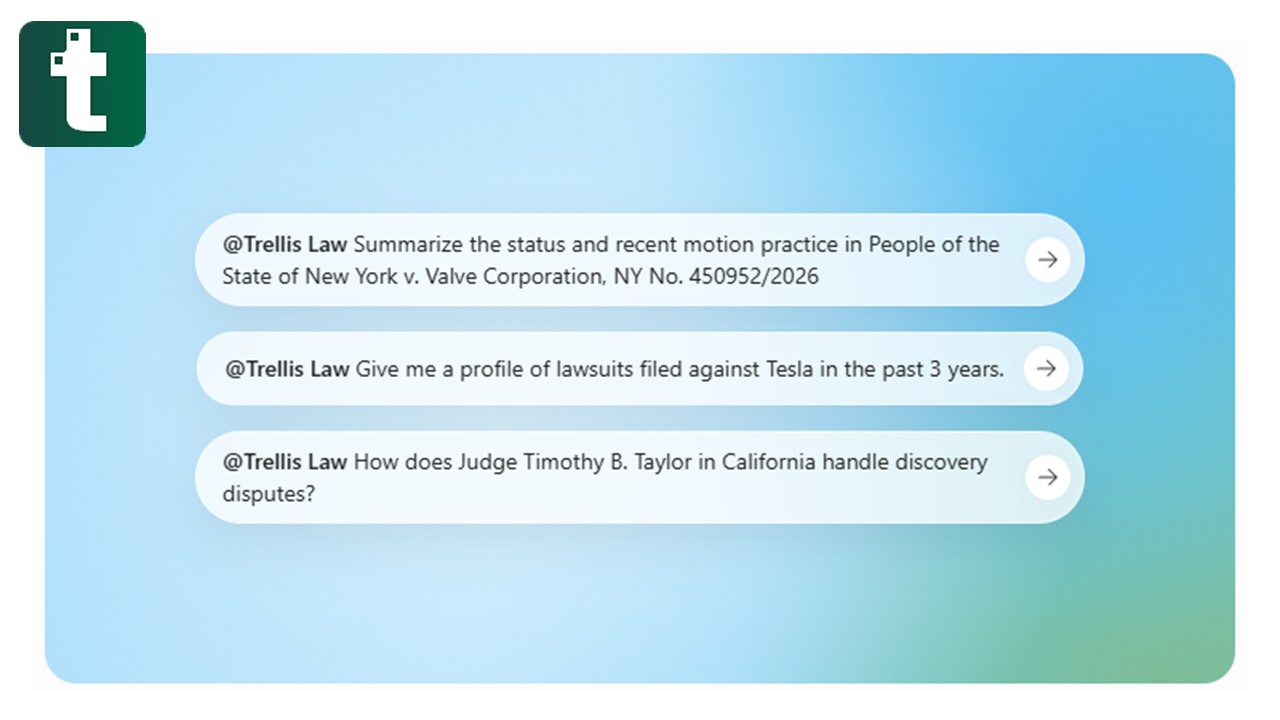


Trellis, a legal research company that provides state trial court data and insights, has expanded agentic AI access to its data with a new plugin for OpenAI’s ChatGPT and a native assistant called Trellis Chat, both of which are in addition to the Trellis MCP connector for Claude that the company launched in May.
Trellis claims to have the largest set of U.S. state trial court data, with more than 2.5 billion records. These integrations are intended to enable litigators to query that data from inside the AI tools they already use.
Attorneys can pose research questions in Claude or ChatGPT, and the connectors pull in relevant filings, rulings, verdicts, and judicial data, rather than leaving the model to answer from its general training, which does not include this data. Trellis Chat offers the same experience from inside the Trellis platform.
In its own customer materials, Trellis offers examples of the kinds of questions the connectors can to handle:
- Pull a judge’s ruling rates on summary judgment motions and compare them against the county average.
- Check an opposing attorney’s win rate and preferred motions in a particular county.
- Map a company’s litigation history as a defendant and summarize the case types, outcomes, and any patterns.
- Profile expert witnesses and their testimony records.
- Compare summary judgment outcomes across venues to gauge which county favors a given side.
Trellis says these connectors enable attorneys to get responses that go beyond simple chat. Rather than return a single answer, the connectors let a user describe a research goal and have the system plan a strategy, search the records, cross-reference results against actual verdicts and motions, and check citations before responding.
Trellis describes an Am Law 100 partner asking Claude Cowork to find factually similar California premises-liability cases involving large retailers and alleged notice of a spill hazard. Using the Trellis MCP, Cowork produced a memorandum with charts, factual analogues, comparable verdicts as damages benchmarks, and citations to underlying dockets, Trellis says.
“There is a real difference between a model that guesses at an answer from general memory and a system that does the research,” said Nicole Clark, a former litigator who is the company’s cofounder and CEO. “The U.S. state court system is the world’s largest, and combining agentic research with the nation’s largest state trial court dataset gives litigators a new superpower.”
The Trellis connectors for Claude and ChatGPT are the first in a series of planned integrations that will extend agentic access to its trial court data across the tools attorneys already use, the company says.
In its customer materials, Trellis describes the four ways customers can now reach its data:
- Its core platform, which houses its judge analytics, attorney analysis, case-strategy reports, and alerts.
- Trellis Chat, which it says is best for fast answers to complex research questions.
- The AI connectors for ChatGPT, Claude, and other tools.
- Direct API (application programming interface) for pulling records into a firm’s own systems.
Trellis says its coverage spans more than 3,500 courts across 2,500 counties in 45 states.
Related LawNext episodes:
- New Trellis AI Solution Leverages State Court Data to Automate Litigation Tasks for Legal Analytics.
- On LawNext – The Founders of Two Legal Tech Startups: Nicole Clark of Trellis and Kevin Walker and Bryan Davis of Centari.
- LawNext: Trellis Founder Nicole Clark Says Court Data is a Litigator’s Secret Weapon.